Direct collaboration
You work with the person building the product, not a sales chain. Decisions move quickly and stay grounded.

Spicanet is the personal product engineering practice of Egor Danilov. I help founders, small teams, and businesses design, build, improve, and launch practical digital products.
1// product engineering practice2export const spicanet = {3 founder: "Egor Danilov",4 focus: "web · mobile · ai",5 delivery: "end-to-end",6 team: "small by design",7};From early product strategy to production delivery, with a calm rhythm and clear ownership.
Practical AI workflows, internal tools, assistants, content systems, and task automation.
Internal dashboards, admin panels, operational tools, and management interfaces.
Secure APIs, data models, background jobs, permissions, and production infrastructure.
Structured publishing platforms for articles, directories, authors, categories, and SEO pages.
A short selection of platforms, apps, and tools built end to end.
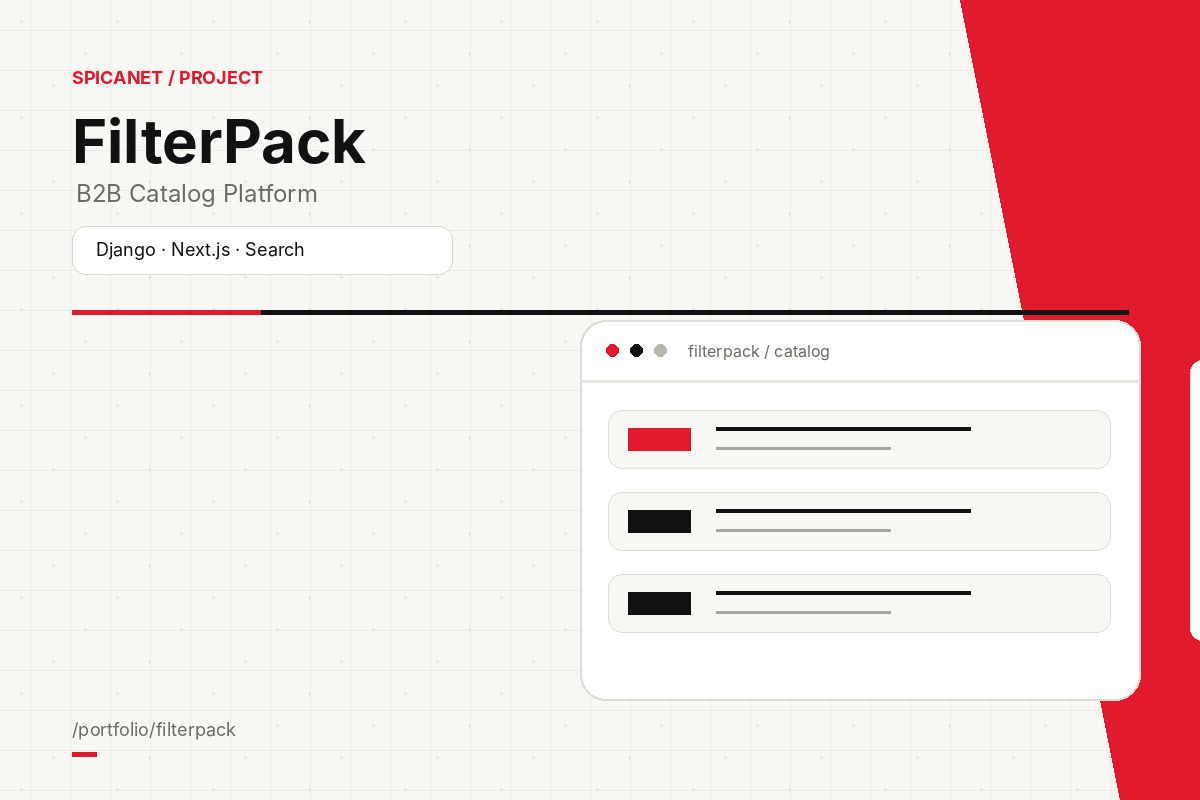
B2B catalog and online store for filters for heavy equipment and trucks.
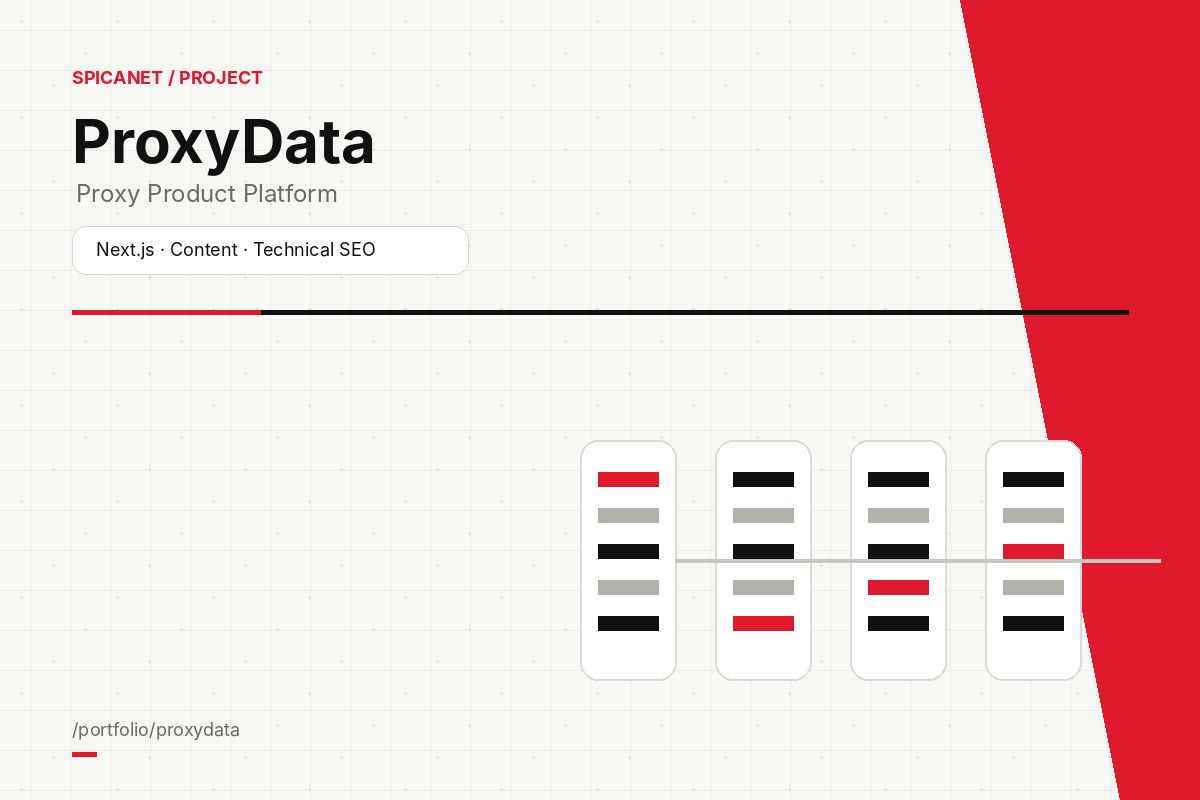
Proxy-focused web platform for data access, proxy content, product pages, and technical documentation.
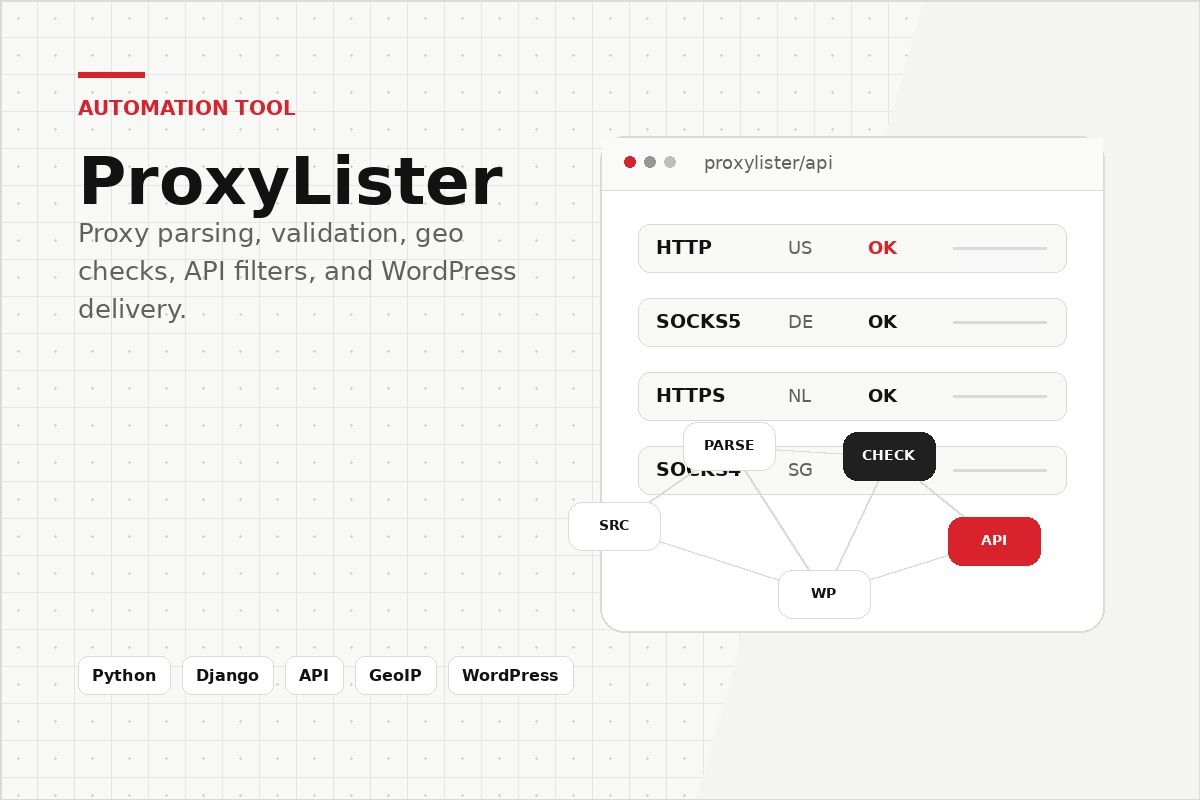
Python and Django system that parses free proxy lists from public sources, checks proxies by geo, availability, supported protocols, and related parameters, then serves the data through a REST API with pagination, sorting, and filters. Public demo at proxylister.com; WordPress plugin available for any WordPress site.
Working with Spicanet means working directly with the engineer building your product, on a calm and reliable rhythm.
You work with the person building the product, not a sales chain. Decisions move quickly and stay grounded.
One person owns the technical outcome end to end — architecture, code, delivery, and follow-through.
From early scoping through launch and post-release polish, with nothing dropped between phases.
Clear data models, typed interfaces, and architecture chosen for the actual product, not for trend.
Steady weekly progress, written plans, and reviewable increments instead of theatrical sprints.
No layered overhead. Trusted specialists join only when a project genuinely needs them.
A straightforward delivery rhythm with clear handoffs and steady progress, from first written brief to launch.
Understand goals, users, constraints, and product context.
Define scope, features, architecture, and delivery path.
Design, code, and assemble the product with clean implementation.
Test, improve, adjust details, and prepare for launch.
Deploy, monitor, support, and improve after release.
Let’s build something practical, valuable, and ready to grow.